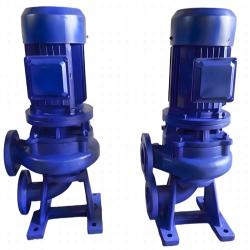


Positive displacement pump
- Model Number: YCB5-0
- Brand Name: kenshine-pump
- Place of Origin: Shanghai, China
- Minimum Order Quantity: 1
- Supply Capacity: 600sets per month/month
- Payment: T/T in advance
- MemberShip: Free Member
- Inquiry Now
YCB5-0 Positive displacement pump Description
positive displacement pump
A positive displacement pump is a type of positive displacement pump that delivers
fluid through periodic changes in the volume of the internal chamber of the pump,
with a relatively constant volume of liquid discharged per revolution or each
reciprocating motion. Unlike centrifugal pumps, its flow rate mainly depends on the
speed, and is less affected by changes in outlet pressure.
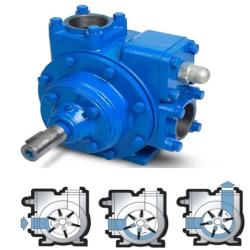
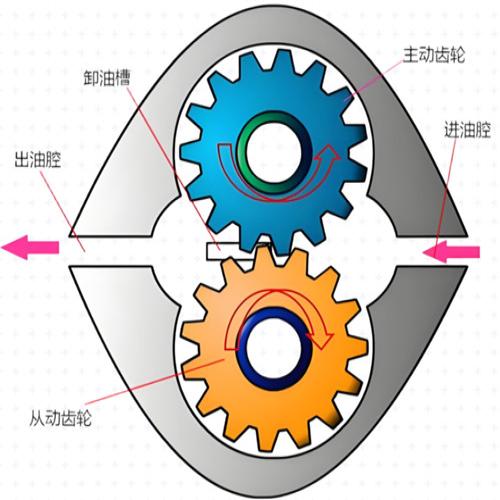
The core principle of a positive displacement pump is "closed chamber delivery",
where the fluid is enclosed in a specific space inside the pump and is "squeezed"
from the suction end to the discharge end through mechanical motion.
Volume change: When the internal structure of the pump (such as gears, screws,
pistons) moves, the suction chamber volume increases to form negative pressure
suction fluid, and the discharge chamber volume decreases to squeeze out the fluid.
Single-way flow: Isolate the suction and discharge areas through one-way valves or
engagement lines to ensure that the fluid does not flow back.
Flow characteristics: In theory, the flow rate is proportional to the rotational
speed, that is, the faster the rotation, the more fluid is discharged, and the flow
rate remains relatively stable when the outlet resistance changes
According to the different internal working parts, positive displacement pumps can
be divided into various types, commonly used in the industrial, food, and
pharmaceutical fields.
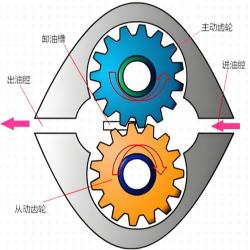
Gear pump: using the rotation of two meshing gears to transport liquids, with a
simple structure, suitable for low or medium viscosity media such as lubricating
oil and fuel.
Screw pump: Conveys fluid through the spiral cavity between the screw and the
liner, with a stable flow rate, suitable for high viscosity liquids such as polymer
melts.
Piston/plunger pump: uses the reciprocating motion of the plunger in the cylinder
to generate high pressure, commonly used for high-pressure cleaning and hydraulic
systems.
Diaphragm pump: changes the chamber volume through the reciprocating deformation of
the diaphragm, suitable for conveying corrosive or particle containing media, with
no risk of leakage.
Rotary cam pump (rotary pump): Valve free design, conveying medium through a closed
chamber formed by the rotor and pump casing, with strong self-priming ability.
Pump advantages
Positive displacement pumps have significant advantages under specific operating
conditions
Strong self-priming ability: No need to pump before starting, able to suck in
liquid.
Wide adaptability: capable of handling various complex media such as high
viscosity, particle content, and corrosiveness.
Pressure stability: When the outlet resistance increases, it can still maintain a
constant flow rate until the mechanical limit.
Precaution and pump protection:
Overpressure risk: If the outlet valve is closed or the pipeline is blocked, the
pump will continue to discharge fluid, causing a sharp increase in pressure, which
may damage equipment or cause safety accidents.
Safety measures: Pressure relief devices (such as safety valves) or interlocking
systems must be installed to automatically release pressure when the pressure
exceeds the set value, preventing overpressure.
Maintenance requirements: When transporting high viscosity fluids, the speed should
be limited to avoid inaccurate flow or cavitation caused by unfilled suction ports.
| flow rate | 1-200m3/h |
|---|---|
| pressure | 2.5MPA |
| pump material | cast iron /stainless steel |
| transfer pump | industrial pump |
| circulation pump | screw pump |
| diaphragm pump | plunger pump |
| gear pump | rotor pump |
| china pump | kenshine-pump |
Retaled category: Gear Pump
Hot search: gear pump, rotary pump, circulation pump, industrial pump, screw pump, transfer pump